31 March, 2012

‘A Gathering Light’ by Jennifer Donnelly (2003)


What a gorgeous, brilliant, scintillating, resplendent novel. What a work of art... This novel, set in 1906, is a complex amalgamation of any issue and every issue you could possibly think of. The main character, a poor farm girl, longs for a better life and tries to achieve this through excelling her education. She has a talent for writing and longs to be part of a world where she can write and read freely. Of course, there are two deterrents to cease her fantastic dreams:  one, she is a girl; two, she is poor.

Sexism, racism, murder and mystery- this novel has it all. It doesn’t give a one sided account either, instead showing every character with great verisimilitude. You can empathise with Mattie (the main character) though personally, I thought that some of the smaller characters, such as Minnie, provide a great deal of insight into America in 1906. When reading it, be forewarned- the murder case that features in the novel actually happened and the letters do exist.

Other than what I have written, there is not much else to add. A genuine, rare and lovely novel, this book has become one of my favourites- and I hope it becomes one of your favourites too.

-Steph

Read this is you enjoyed: Ruby Holler (Creech);  Revolution (Donnelly);  Just In Case (Rossoff).
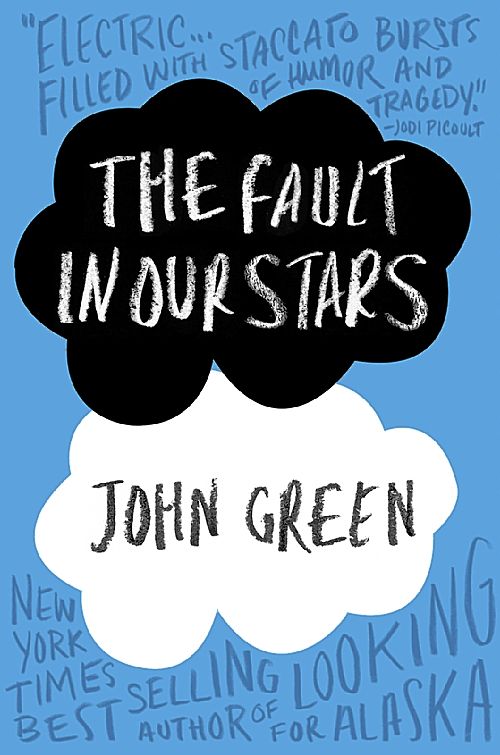
'The Fault In Our Stars' by John Green (2012)


This book is about death. It doesn’t pretend to be anything else and even from the first chapter, we are aware that the book will end sadly. On the other hand, there are little bits of humour scattered throughout the novel that make it a ‘cry one line, laugh the next’ kind of experience.

Let me sum it up for you: Hazel is a young cancer patient trying to come to terms with her illness and her life. Her and her friends, Augustus and Isaac, make a brilliant group of intellectual and fun-loving teenagers. In this way, Green portrays Hazel in such a unique way. She is not depressing. She is average, and that’s what makes her extraordinary. The novel isn’t saccharine by any means, neither is it terribly depressing. It contains an element of authenticity that John Green is renowned for.


The plot twist becomes predictable about three quarters of the way through though it doesn’t take anything away from the characters. The ending is obvious though Green fulfils it in such a beautiful way- his writing style is impeccable and remains so until the last word.

I’m not sure as to what else I can say; this book deserves to be read and deserves to be understood. While a novel about death may seem morbid or macabre, the overall message of ‘The Fault In Our Stars’ is that life goes on and that the human spirit never really dies.

-Steph

Read this if you enjoyed: Looking For Alaska (Green); The Perks Of Being A Wallflower (Chbosky).

Movie of the Week

                       Fish Tank (2009)
Directed by Andrea Arnold
Starring Katie Jarvis, Michael Fassbender
The independent drama picked up the 2010 BAFTA for best British film as well as the Jury prize at the 2009 Cannes Film Festival, and the accolades are well deserved. The story of a volatile teenager who lives in a council flat in East London with her younger sister and her mother. She is a loner and she dances by herself. However, when her mother brings home a new boyfriend, played brilliantly by Michael Fassbender, everything changes. 
I can honestly say this is one of my favourite films. It's so bleak and yet so beautiful and performances are brilliant all around. 
5/5
- Cassie


'The Hunger Games' by Suzanne Collins

"May the odds be ever in your favour!" These are words of Effie Trinket, a member of the Capitol whose job it is to draw the names of one boy and one girl from every of the 12 districts of Panem to fight to the death in the Hunger Games. This book is going to be one that defines a generation. The first novel, that has just been adapted into a film that earned 214.25 million dollars in it's opening weekend alone, is the inception of a franchise that will earn millions to due to it's appeal to young adults. It's message and storyline is one that contains a fantastic message and encourages the youth of our society to think.

The Hunger Games is an annual event in Panem. It is punishment for the 13 districts for rebelling against the Capitol. In the process District 13 was destroyed. As a result, a tribute ages twelve to eighteen is chosen from each district, a boy and a girl. Katniss volunteers when her younger sister, Prim is reaped, and the fangirl favourite, Peeta, is reaped as the male tribute.

The Hunger Games is brutal. Not witholding the violence, Collins creates a gory world, only adding verisimilitude to the world. The lead protagonist, Katniss, is perhaps one of the strongest female characters I have come across in literature. She is brave and can fight for herself. In contrast, we have Peeta who can... well... bake and paint himself. In teen novels such as Twilight where we have females like Bella moping around, Katniss is reassuring to me as she doesn't rely on men and is fiercely loyal to her family.

The most resonating concept in the book is the message on government control. I almost used this book as a related text to 1984! It condemns governments which oppress the people of a nation in any way. The length they are going to to suppress the people of the districts in the books is demonstrated through the Games but also through the slum like conditions of district 12. The book is intellectually stimulating, allowing our youth to question the nature of totalitarian regimes.

This book is amazing. I finished the series in five days. It's messages on totalitarian governments and questioning authority through rebellion in the appeal of the series and at the end of the day it allows us to gain a deeper knowledge through the violent state of the Games.

- Cassie

Read this if you enjoyed: 1984 (Orwelle), Tomorrow, When the War Began (Marsden), Divergent (Roth)

Sorry for the delays!

Steph and I have been seriously busy with school work so we haven't been updating as often as we should. Seriously, we got three more English tasks the other day, but we'll try our best to post a couple of reviews a week. Thanks!

- Cassie

01 March, 2012

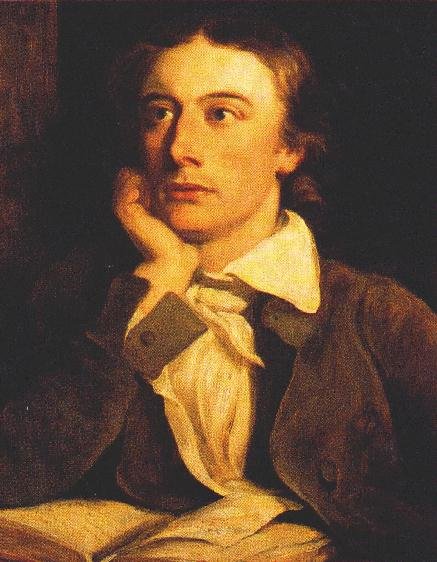
Poet Of The Week: John Keats (1795-1821)


Strange but true: I adore Romantic literature, particularly Romantic poetry. Whether or not this sounds pretentious, I am unsure, though I am being completely honest. I adore the Romantics of the late 18th Century in a way that is both nerdy and probably unheard of for a sixteen year old (If you don’t know about Romantic literature, Google it). I love the way the stanzas are arranged, I love the words and how my mouth might feel honoured to have certain phrases or arrangements of words pass between my lips. Only someone who has read a great poem will understand this adoration and even then, it might sound absurd.

I’ve chosen John Keats, from all the brilliant poets that have written brilliant pieces, for the simple and biased reason that as I was growing up, I read John Keats’ poetry before the others. I read ‘To Autumn’ before ‘Don Juan’, I read ‘To Sleep’ before ‘Adonais’ (some may understand the irony of this). Strangely enough, I read Keats before Wordsworth. Is that unexpected? Perhaps (again, I can’t help but feel that I’m coming across as a pretentious snob who only reads ‘fine literature’ and avoids any other style of writing. This is not the case- there is just something enchanting about Romantic poetry that communicates a profound sense of meaning to my soul).

John Keats was not a perfect poet. Sometimes, his techniques are lacking. Sometimes, the lines are uneven. For me, this gives them a deeper beauty and, as the poet himself states: “A thing of beauty is a joy forever.” Indeed, Keats has written timeless poetry. In his life, he believed he would fade, that his name was 'writ in water' but I can never see Keats’ poetry dying away, let alone any poetry ever written. Call it naive, but I’d like to think that great poetry will survive until the ends of all spoken language.

Would I recommend Romantic poetry? Of course I would. I’d recommend any kind of poetry, whether it is Decadent, Romantic or even Jacobean. Whether you prefer blank verse to villanelles, I’d suggest everyone to ask an English teacher or a librarian about poetry. You might discover something brilliant.

- Steph.

Read Keats if you enjoyed the poetry of Percy Bysshe Shelley, Oscar Wilde, Emily Dickinson, Wilfred Owen or any contemporary poet. 

Movie of the Week

Boy A (2007)
Directed by John Crowley 
Starring Andrew Garfield, Peter Mullan


Boy A is a British film adaptation of Jonathan Trigell's critically acclaimed novel. It follows the story of 'Boy A', Jack, who is newly released from prison for a horrendous crime he committed as child and must now deal with the consequences as an adult. 
It's beautifully made, acted and written and is a film I highly recommend. 
4/5
- Cassie